

|
|
|
|

|
|                 |
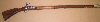
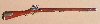
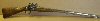
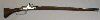
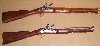
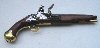
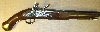
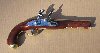
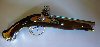
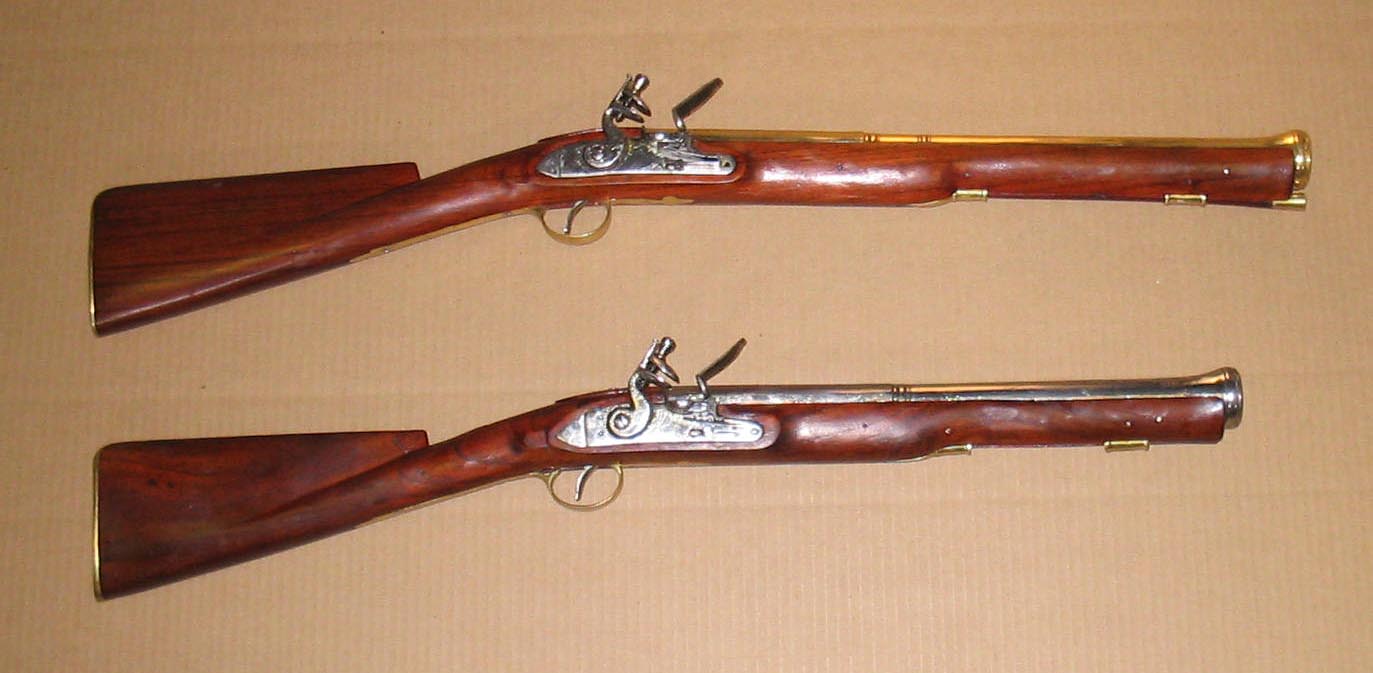
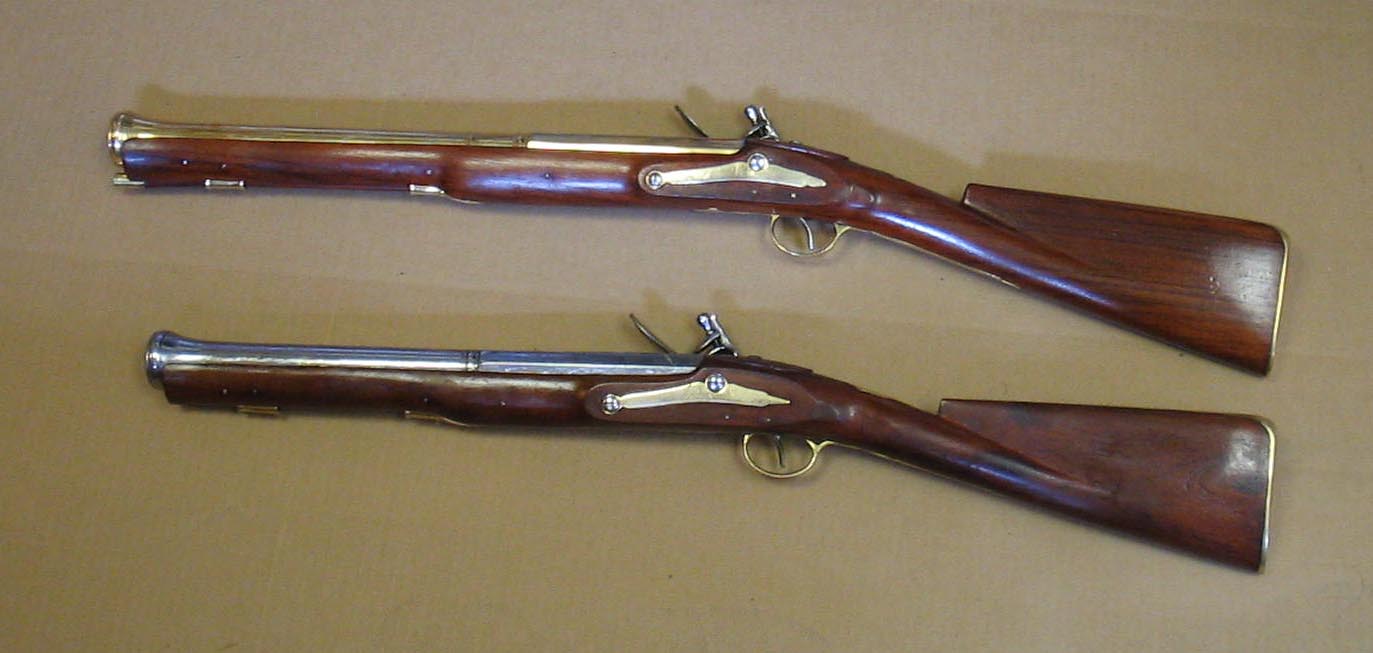
| Here are our Brass and Steel Barreled Blunderbusses. The original piece that was copied to make this was most likely Dutch in origin. |
|
| Here's a view from the left. These are fun little guns. Yes, I know I forgot to put the rammer back in the steel gun before taking the photo. Don't worry, it comes with a rammer. |
|
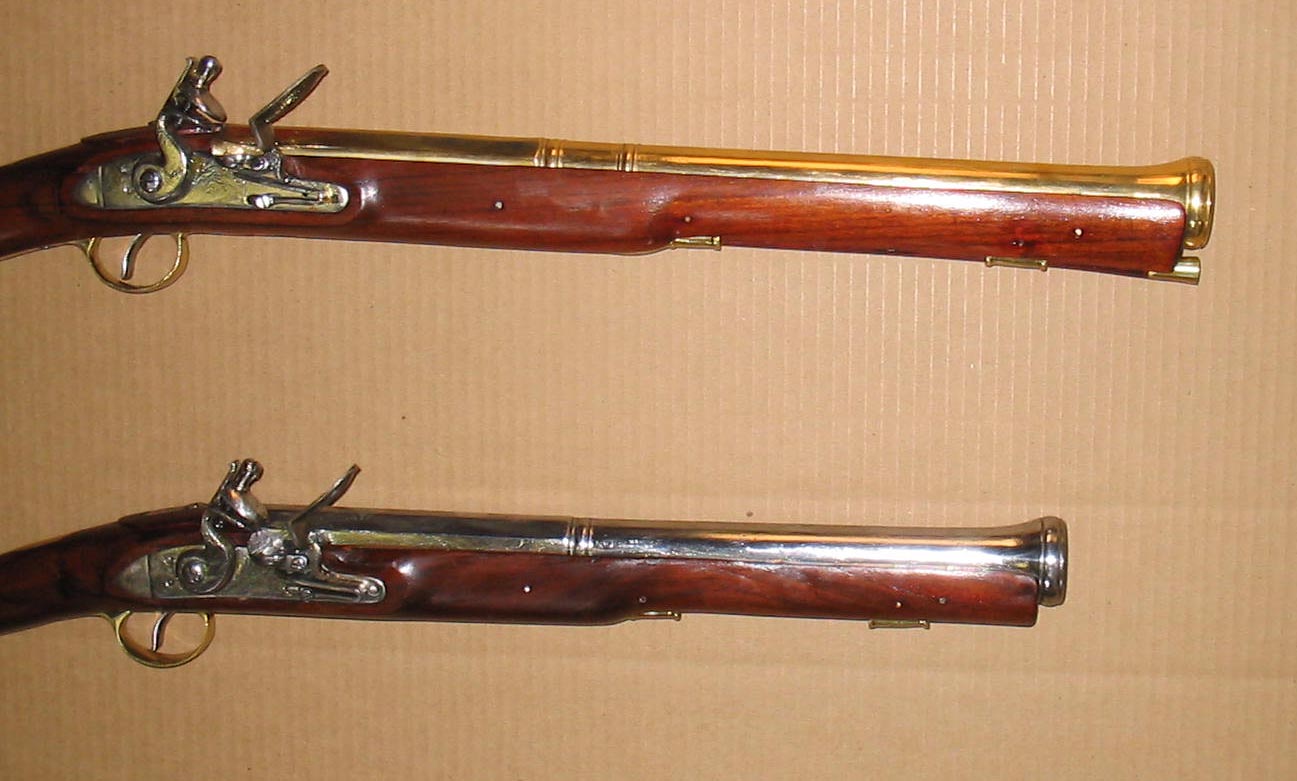
| Here is how the barrels compare to each other. The Brass gun has an 18" three stage barrel with a double wedding ring. The whole thing weighs 6 lb. The steel gun has a 15" two stage barrel with a single wedding ring. It weighs 5.1 lb. |
|
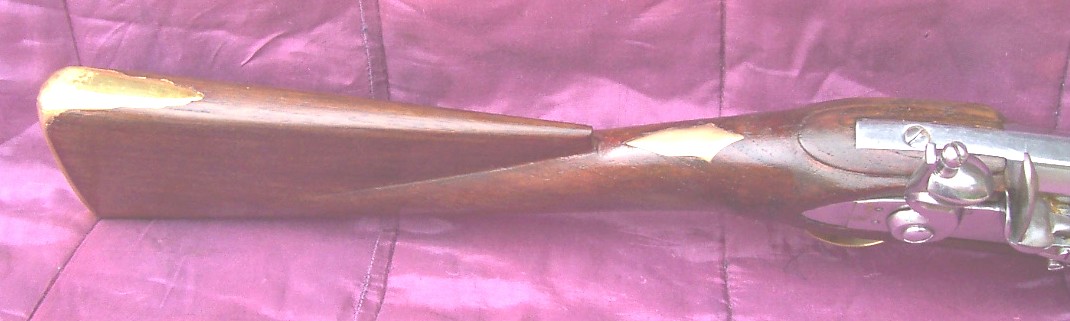
| Here's the comb and wrist area. The buttplate is English style, but the thumb piece and sharp angle of the comb are Germanic, a typical mix of styles that are typical of "low country" manufacture. Holland and Belgium were prolific arms producing countries in the 17th-19th centuries and it was not unusual for gunmakers to mix style like this. |
|
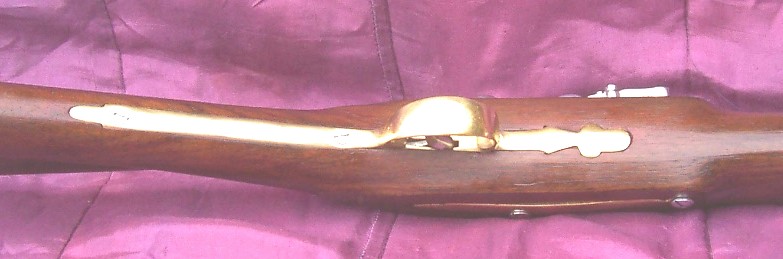
| It has an English style triggerguard with an acorn finial. Another indicator of it's Dutch heritage is the lack of engraving on the triggerguard. The gunsmith would have simply made a pattern from an English piece but not wasted the time with fancy engraving as would be seen on a fowler. Dutch arms were built for fighting, not for show! |
|
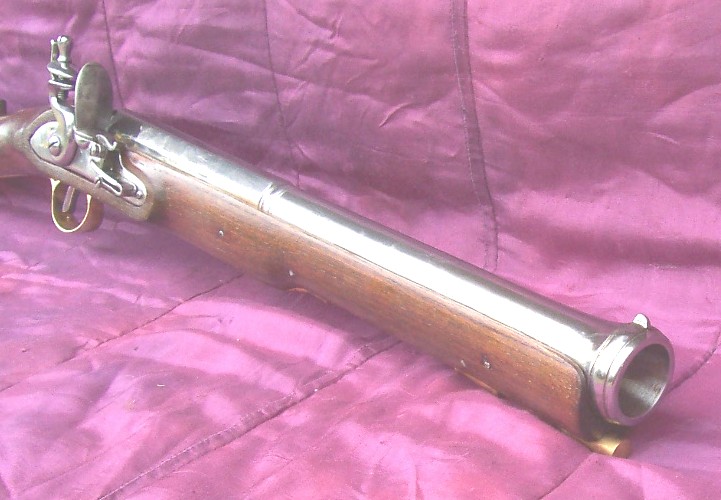
| A look down the flared muzzle. This is an old photo, they do not have that tall front sight anymore. Can anyone guess why these used to come with sights on them about 10 years ago? Ask me and I'll tell you the story. |
|