| |
|
|
|
|
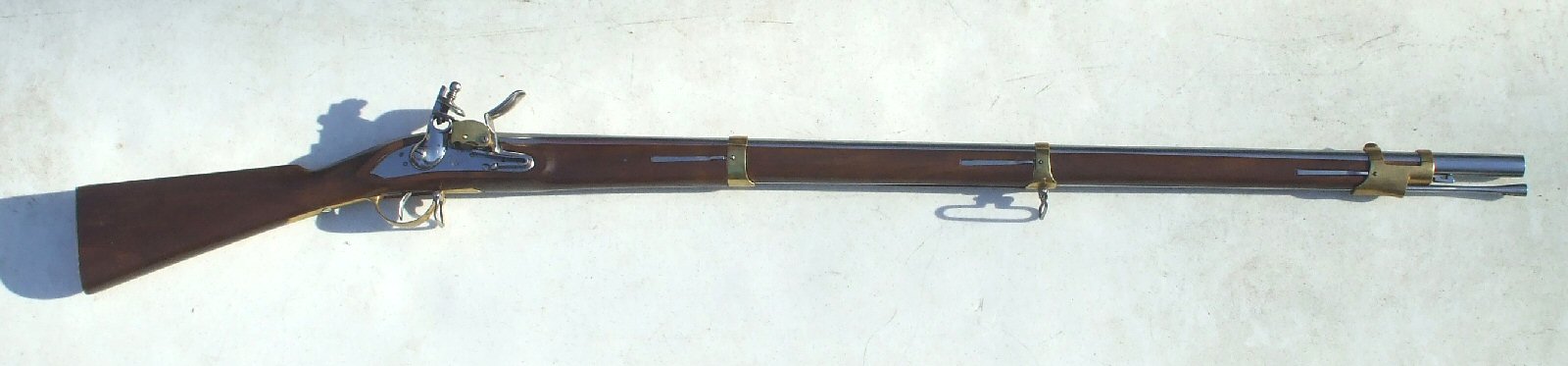
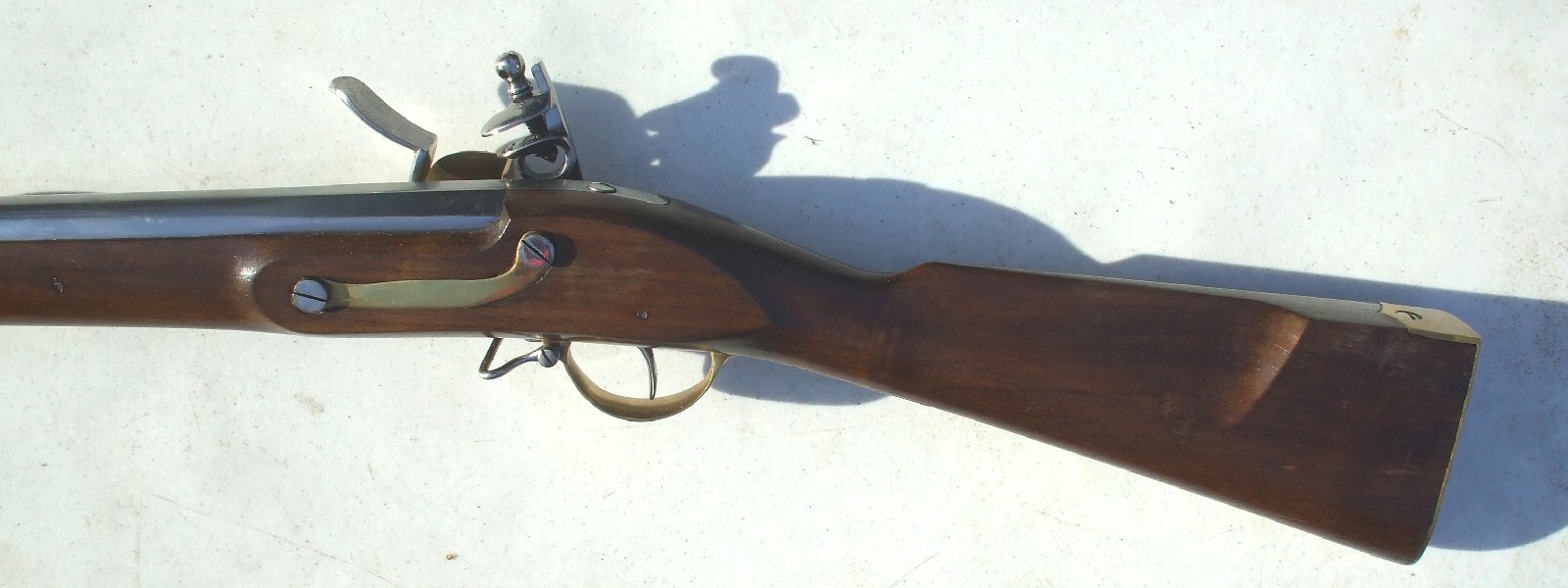
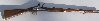
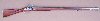
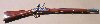
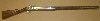
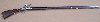
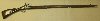
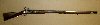
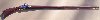
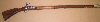
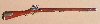
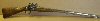
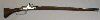
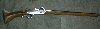
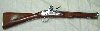
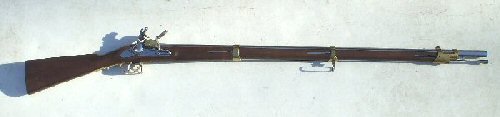
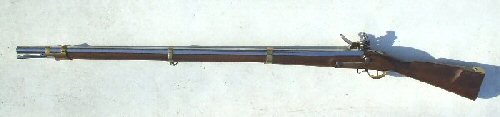
Here is a musket that has a dual history. It was used by Prussian infantrymen in the Napoleanic era and later many of them were sent here to the US and converted to percussion for use in the Civil War.
|
|
| |
|
|
|
|
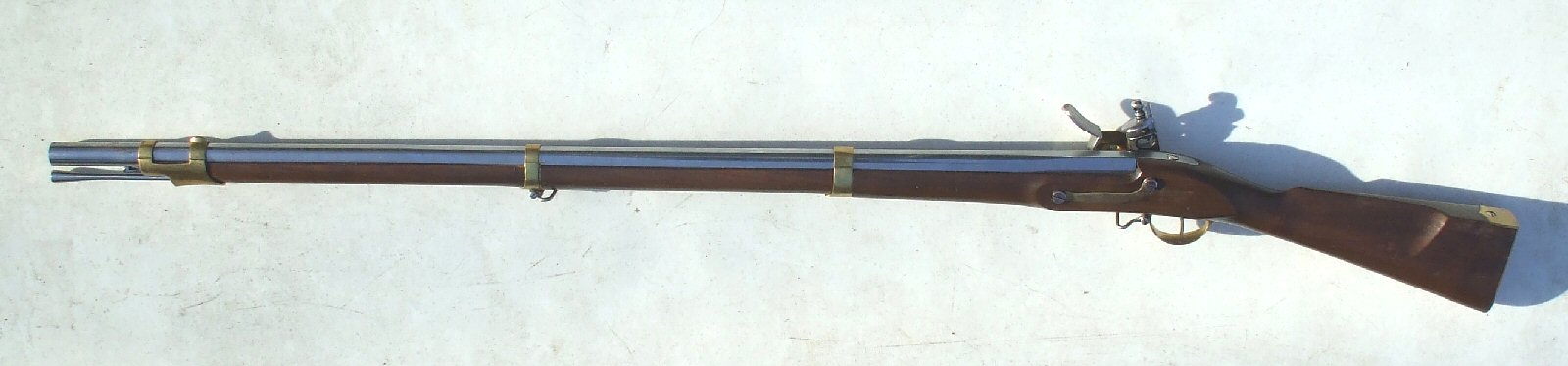
The left side. The musket has brass furniture. The .75 caliber smoothbore barrel is 41 1/2" long. Overall length of the gun is 57". Weight is just over 9 pounds.
|
|
| |
|
|
|
|
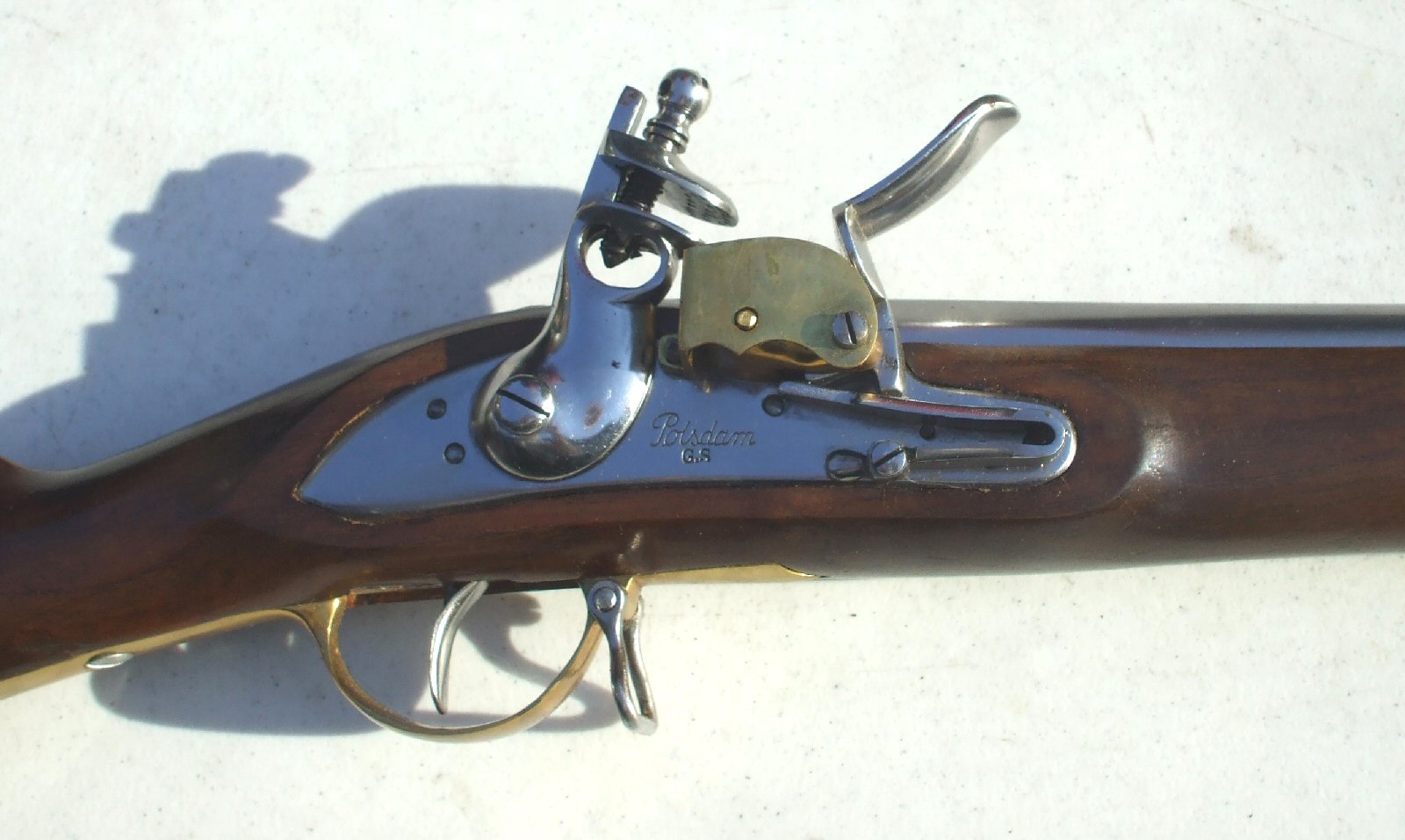
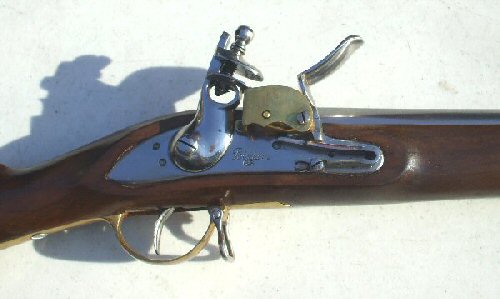
Here is the lock. There is a brass flashguard built right in. Notice the similarity to the French locks of the era?
|
|
| |
|
|
|
|
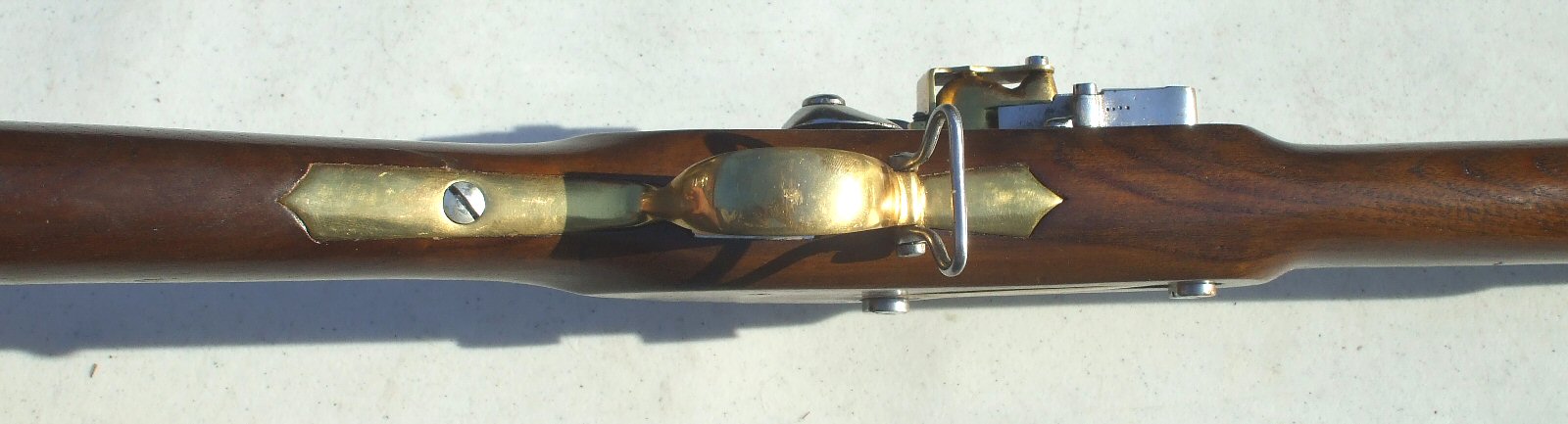
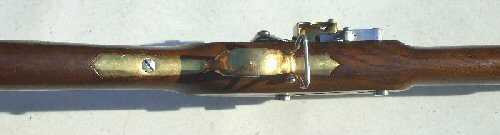
Here is the triggerguard, with destinctive German styling for the era.
|
|
| |
|
|
|
|
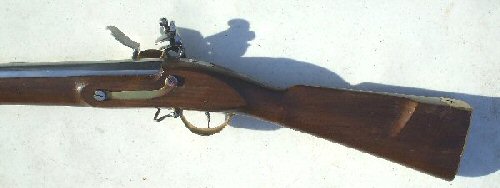
A simple brass sideplate. By this era, the Germanic guns were becoming more ulititarian in their styling as compared to the previous century.
|
|
| |
|
|
|
|
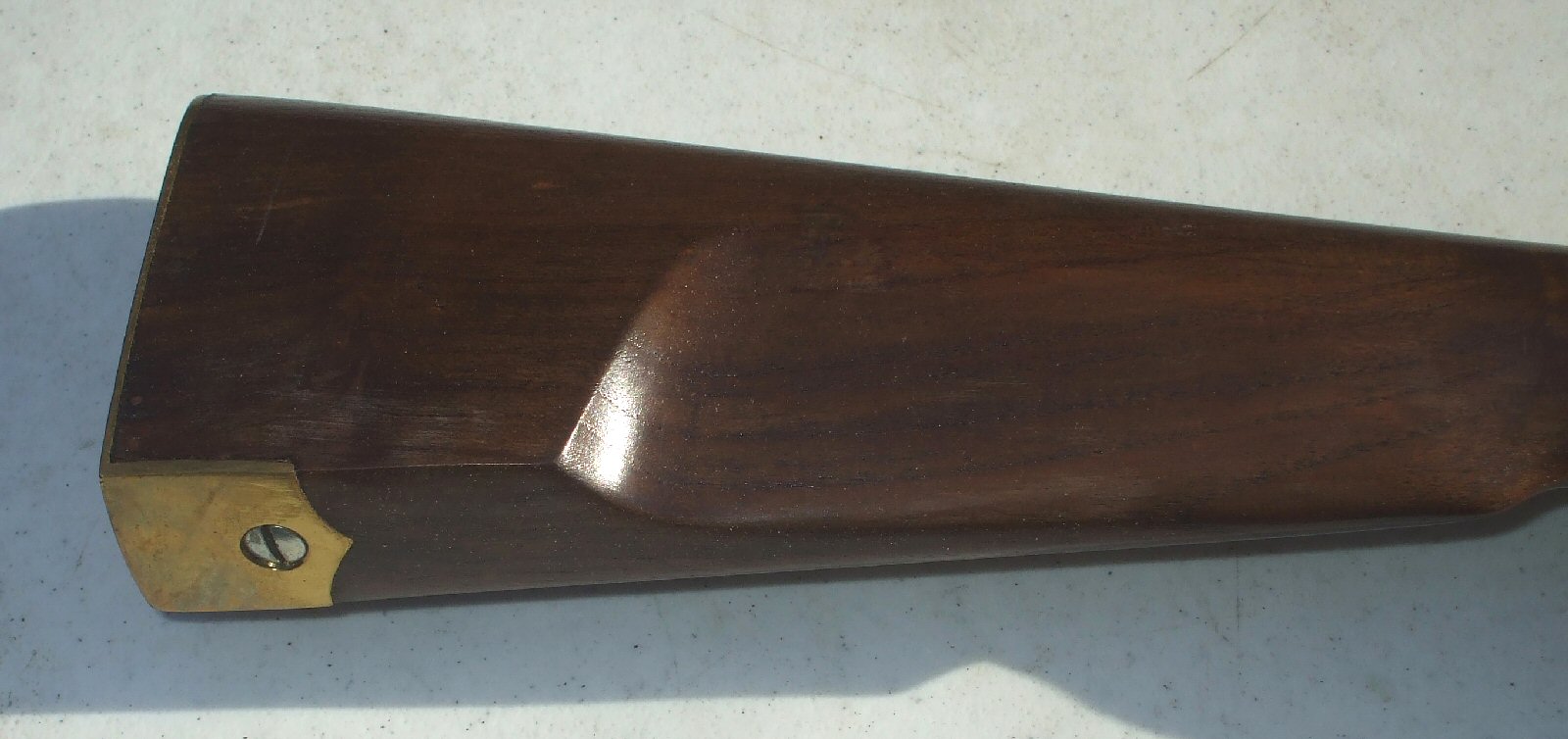
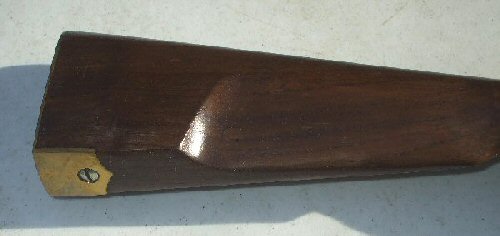
The buttplate tang has a typical Germanic arrowhead motif, and the comb of the stock is cut away like a 1777 French musket in order to line the shooter's eye up with the barrel.
|
|
| |
|
|
|
|
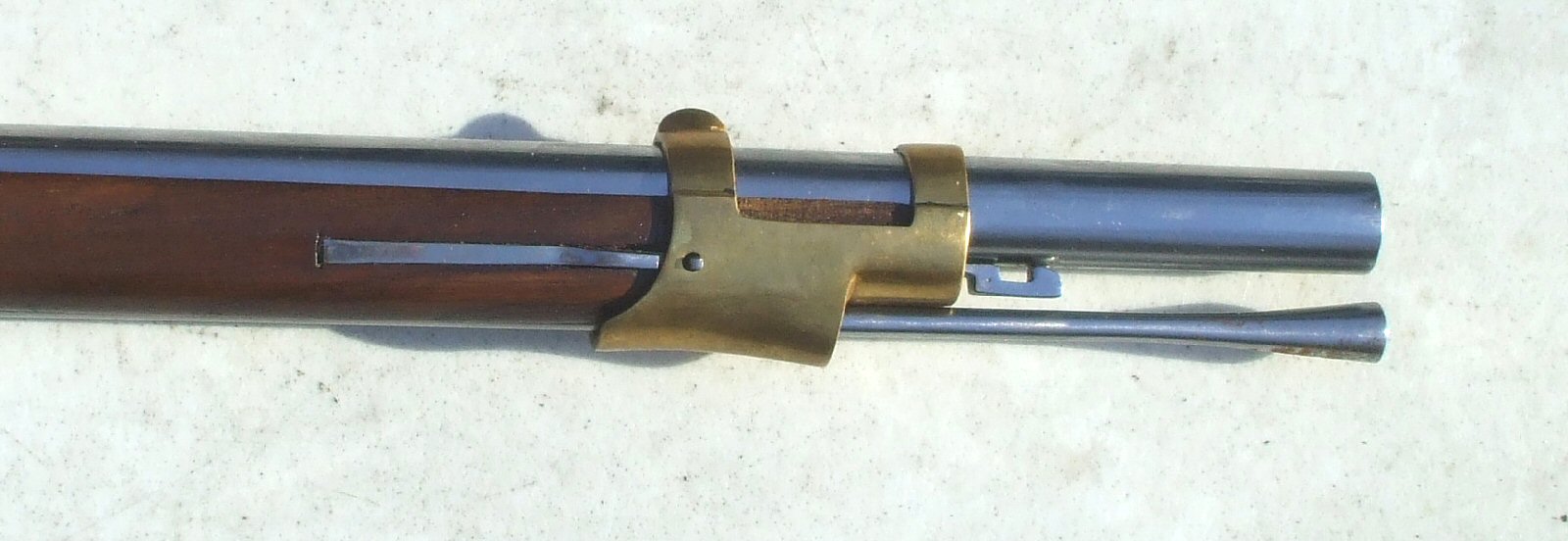
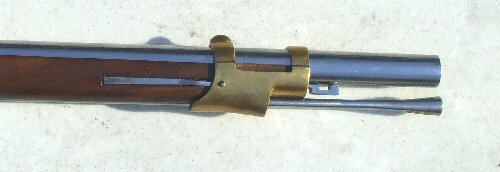
Here is the business end. The brass bands are not there to make the gun easier to take down for cleaning, but it is an added benefit. The main function of barrel bands on a military musket is to add strength when using a bayonet.
|
|
| |
|
|
|
|
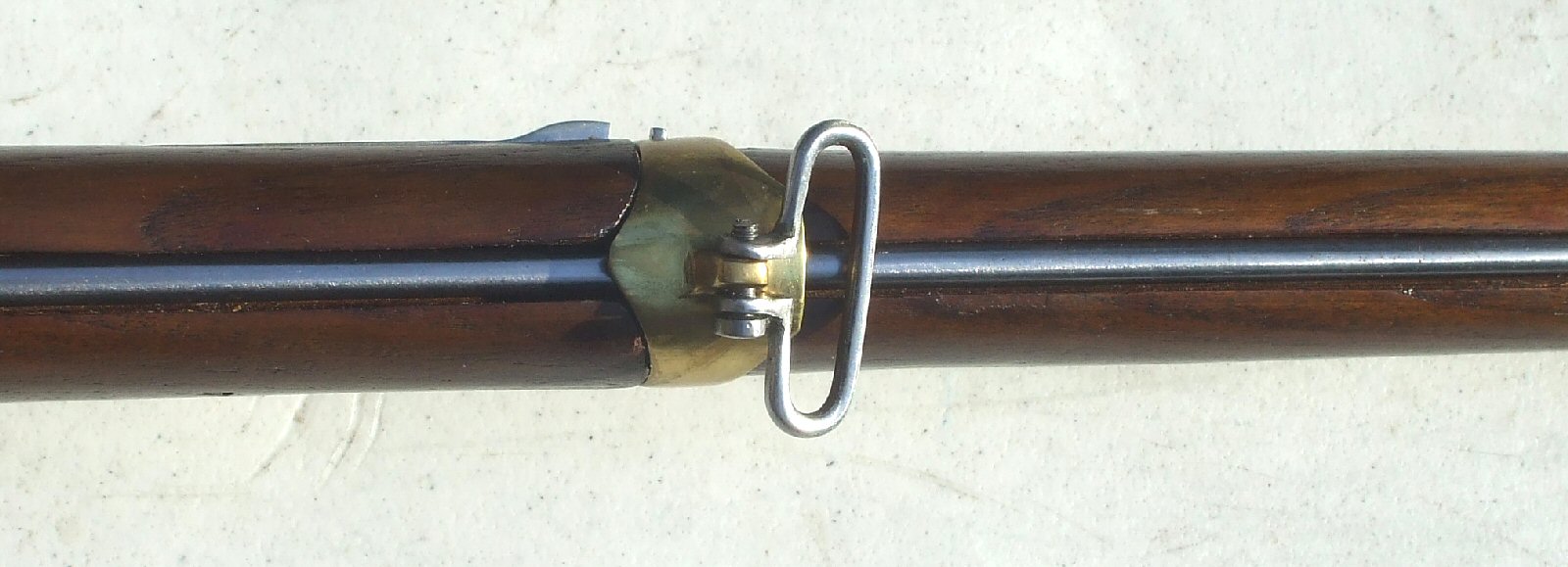
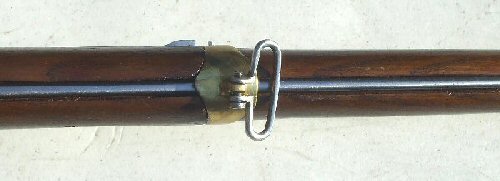
This is the middle barrel band along with it's sling swivel.
|
|
|